When you look at your side profile in the mirror, do you feel that your lower jaw protrudes much further than the rest of your face? Having your lower teeth overlap your upper teeth and a prominent chin is not just an aesthetic concern; it is a severe skeletal issue. Many people avoid smiling to hide their underbite and search the internet for ways to fix this condition without surgery.
Standard clinics usually only offer braces (orthodontics) for this issue. However, if your problem is the actual length of your bone rather than just crooked teeth, wearing braces for years will never fix your facial profile. To achieve a true, permanent, and aesthetic golden ratio, the root of the problem must be addressed by moving the bone structure back. In this article, we will thoroughly examine the condition of a protruding lower jaw and the definitive surgical solutions performed by our expert team and Prof. Dr. Celal Candirli.
Table of Contents
- Why Does An Underbite Occur
- Are Braces Enough On Their Own
- The Definitive Solution With Orthognathic Surgery
- Braces vs Jaw Surgery Comparison
- Frequently Asked Questions
- Conclusion
Why Does An Underbite Occur
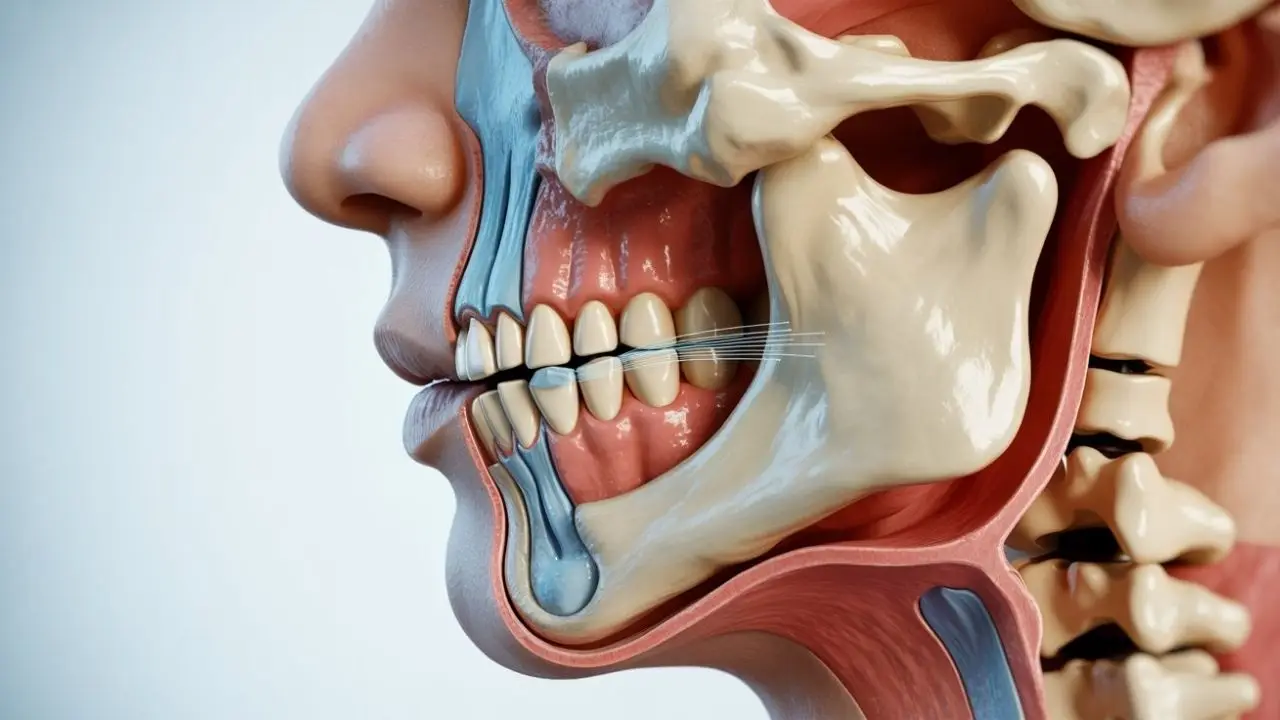
Medically known as “Mandibular Prognathism,” the primary cause of an underbite is usually genetic factors. During the growth spurt in childhood and adolescence, your lower jawbone simply grew much more and extended further forward compared to your upper jaw. Sometimes, the growth of your upper jaw falls behind, making the lower jaw appear more prominent than normal.
This skeletal mismatch not only ruins your facial aesthetics. Because your upper and lower teeth do not meet properly (crossbite), you cannot bite or tear food correctly. The inability to chew food fully often leads to stomach issues, while the incorrect function of the temporomandibular joint (TMJ) paves the way for severe head and neck pain over time.
Are Braces Enough On Their Own
The most common misconception among patients with a protruding lower jaw is believing that this skeletal problem can be solved solely with clear aligners or braces. Braces only move your teeth within the bone; they cannot change the actual length or position of your jawbone.
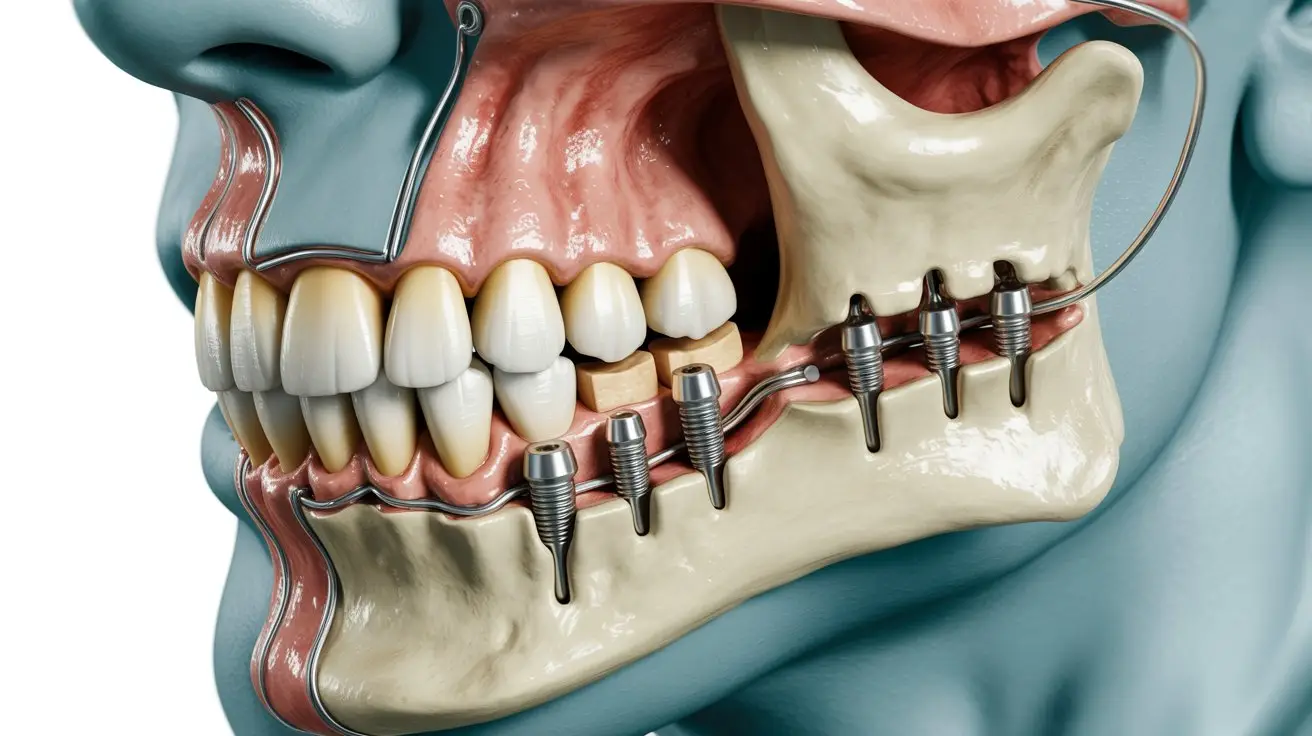
If the protrusion is at a skeletal level, simply wearing braces cannot go beyond a “camouflage” treatment. Your teeth may tilt to touch each other, but when looking at your face from the side, your lower jaw will still look sharp and protrude. Moreover, forced orthodontic treatments that do not suit the bone structure can cause gum recession and tooth root loss in the future.
The Definitive Solution With Orthognathic Surgery
You cannot shorten an overgrown bone just by pushing the teeth backward. The only way to achieve that harmonious, aesthetic, and soft profile you desire is to move the bone back to where it truly belongs. Prof. Dr. Celal Candirli performs advanced Orthognathic Surgery (Jaw Surgery) to solve this underbite problem permanently.
Before the surgery, a mathematical analysis of your face is extracted using 3D scans. During the surgical procedure, your excessively grown lower jawbone is precisely moved back to its ideal position, conforming to the golden ratio. Since all these procedures are performed entirely from inside the mouth, there are absolutely no cuts or stitch marks on your face. When you wake up, your teeth meet flawlessly, and your lower jaw perfectly harmonizes with your face.
Braces vs Jaw Surgery Comparison
When evaluating your treatment options, you can clearly see the differences between relying solely on orthodontics and choosing surgical correction in the table below:
| Features | Braces Only (Camouflage) | Orthognathic Surgery (Jaw Surgery) |
|---|---|---|
| Effect on Facial Profile | Side profile (chin position) does not change | Facial profile is completely balanced and fixed |
| Solving The Root Cause | Only tilts teeth, skeleton remains the same | Solves the fundamental skeletal (bone) issue |
| Bite Quality | Can create a forced, unnatural bite | Provides a flawless and natural chewing function |
| Longevity | Teeth tend to relapse to their old positions | Permanent for a lifetime as the bone fuses |
Frequently Asked Questions
1 – Can an underbite be fixed without surgery?
If the problem is only related to the alignment of your teeth, braces might be sufficient. However, if the issue stems from the length of your lower jawbone (skeletal), a permanent and aesthetic solution without surgery is absolutely impossible.
2 – Does jaw setback surgery leave scars?
Absolutely not. All orthognathic procedures we perform in maxillofacial surgery are done from inside the mouth. Therefore, there will be no visible surgical scars on your cheek, neck, or chin.
3 – Is there a specific age limit for the surgery?
For jaw surgery, bone development must be fully complete. This usually corresponds to around 17-18 years of age for women and 18-20 years for men. There is no upper age limit; it can be performed on any adult with good general health.
4 – How long does the recovery process take?
It is normal to have swelling on your face for the first week after the surgery. Most of our patients are able to return to their daily social lives and desk jobs within 10 to 14 days.
5 – Will my voice or speech change after surgery?
You will not experience a permanent voice change. On the contrary, because your teeth will close perfectly when your lower jaw is in the correct position, you will start pronouncing certain letters (especially s, z) much more clearly and properly.
Conclusion
You do not have to endure your lower jaw protruding in front of your face, making you look angrier or harsher than you are. Instead of wasting time with braces treatments that last for years and do not solve the skeletal issue, you should focus directly on the foundation. Orthognathic surgery, performed with the expertise of Prof. Dr. Celal Candirli, moves your lower jaw to its required golden ratio, offering you a natural, aesthetic, and functional smile that you will carry with confidence for the rest of your life.
Important Disclaimer: This article is for general informational purposes only. Treatment decisions should be made only after a doctor’s examination.
If you have any concerns, feel free to contact us for detailed information and evaluation.
Oral, Maxillofacial & Jaw Surgeon
Graduate of NHS Poole & Newcastle Freeman Hospital, UK
20+ years of experience • 50+ international publications