When you look in the mirror or at side-profile photos, you might feel that your nose looks disproportionately large or excessively humped compared to your face. Many patients immediately seek rhinoplasty (a nose job) to address this aesthetic concern. However, facial beauty is a matter of holistic harmony and proportion. The perceived size of the nose is directly related to the position of the underlying jaw skeleton. If the issue is not the actual size of your nose but a retrusion of your upper or lower jaw, the path to true aesthetic and functional harmony lies in Orthognathic Surgery.
Skeletal Illusions in Profile Balancing
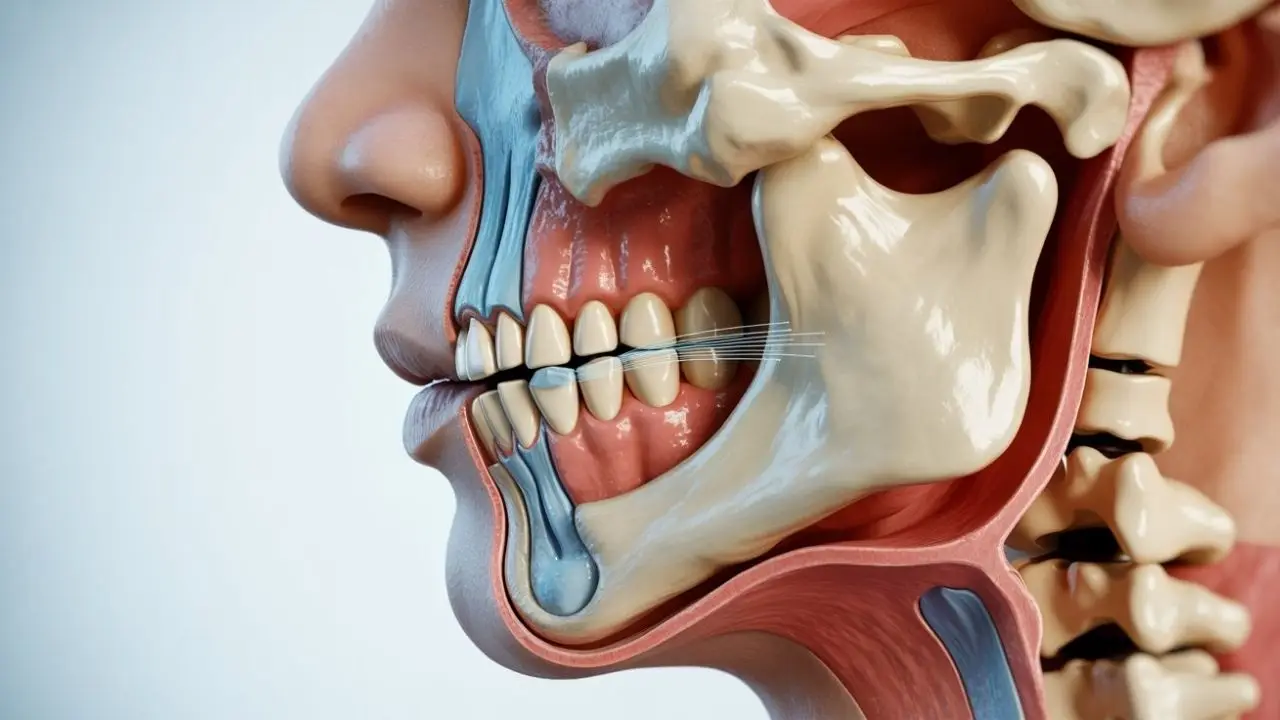
In facial anatomy, the nose rests directly on the upper jawbone (maxilla). The lower jaw (mandible), meanwhile, dictates the balance in the lower third of the face.
If your upper or lower jaw failed to grow sufficiently forward during childhood and adolescence (Maxillary/Mandibular Hypoplasia), your facial skeletal foundation takes on a “sunken” form. In this scenario, where the midface and chin are retruded, even a perfectly normal-sized nose is perceived as the most dominant and protruding feature on the face. Known in medical literature as a profile imbalance, this condition is frequently misinterpreted by patients as a “large nose” complaint.
Is Rhinoplasty Alone Enough for Skeletal Deficiencies?
Rinoplasty is an excellent surgical procedure for correcting deformities in the nasal cartilage and bone structure. However, if the patient’s primary issue is a retruded jaw skeleton, merely reducing the nose can create several aesthetic and functional limitations:
Facial Flattening: Over-reducing the nose (removing tissue) to match a retruded jaw can cause the face to lose its characteristic depth, resulting in a completely flat and uninspiring profile.
Respiratory Functions: Jaw retrusion is a factor that already narrows the airway (respiratory passage). Further reducing the nasal passages on top of this can exacerbate problems like nasal congestion and snoring.
Undefined Jawline: Even if the nose is reduced, the lower jaw retrusion persists, leaving the neck and double chin area prominent. The desired sharp, defined jawline cannot be achieved.
Orthognathic Surgery and Profiloplasty (Profile Balancing)
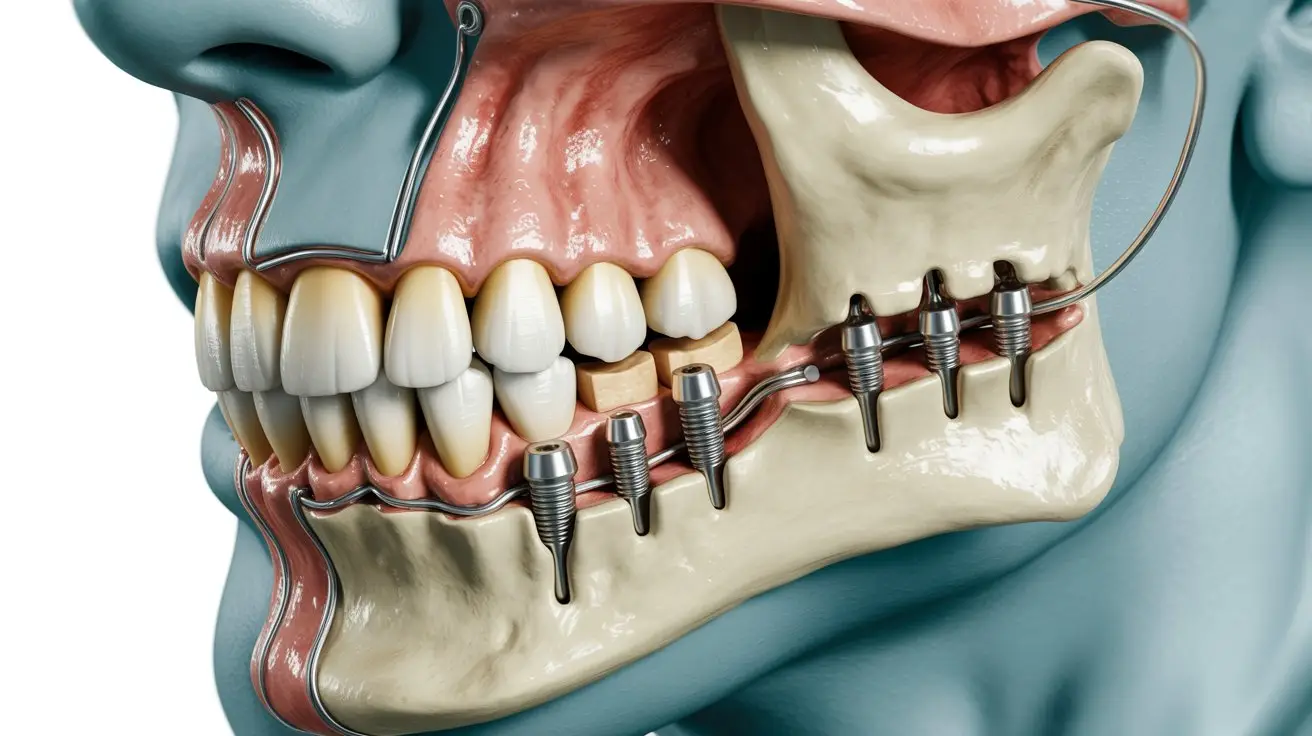
To achieve a true, permanent “supermodel” profile—the golden ratio—the facial skeleton requires forward growth support. Prof. Dr. Celal Çandırlı performs Orthognathic Surgery (Double Jaw Surgery) to move your facial skeleton into its ideal position and balance your profile.
In this advanced operation, the upper and lower jaws are millimetrically advanced. When the upper jaw moves forward, the nasal base is naturally pushed upward and outward. This supports the nasal tip, softens the appearance of a dorsal hump, and brings the nose into perfect harmony with the new, strong jawline. For many patients, the nose becomes so balanced with the face after jaw surgery that an additional rhinoplasty is deemed completely unnecessary.
Comparison: Rhinoplasty vs. Jaw Surgery Approaches
| Feature | Rhinoplasty Alone (In Jaw Retrusion Cases) | Orthognathic Surgery (Jaw Surgery) |
| Primary Focus | Shapes the nasal cartilage and bone structure. | Corrects the overall skeletal support and proportions of the face. |
| Facial Harmony | Does not alter the weakness in the jawline. | Naturally balances the nose and entire profile by advancing the jaws. |
| Breathing and Airway | Respiratory capacity may be affected as the nose is reduced. | Advancing the jaws significantly eases breathing by expanding the posterior airway. |
| Lip Support | Has no direct effect on lip form. | Maxillary advancement provides natural support and volume to the lips. |
Who Are Ideal Candidates for Jaw Surgery?
If you are unsatisfied with your side profile, accurately identifying the root cause is crucial before deciding on an aesthetic intervention. You may be an ideal candidate for orthognathic surgery if you experience the following:
You feel your nose looks disproportionately large for your face while simultaneously noticing a weak or retruded chin.
You have a dental malocclusion (the lower jaw is too far back or forward, and your teeth do not meet correctly).
Alongside aesthetic concerns, you suffer from functional issues such as chronic mouth breathing, snoring, or sleep apnea.
Flawless Preparation with 3D Virtual Surgical Planning (VSP)
Success in comprehensive facial surgeries relies on detailed medical engineering. Before the surgery, Prof. Dr. Celal Çandırlı utilizes high-resolution 3D Cone Beam Computed Tomography (CBCT) scans to create a digital map of your skull.
Thanks to Virtual Surgical Planning (VSP) software, the exact millimeter advancement required for both the upper and lower jaws to achieve the facial golden ratio is digitally calculated. How the new position of your jawbones will affect your nose and lips is predicted prior to surgery. Because the operations are performed intraorally (inside the mouth), no scars are left on the skin surface.
To identify the root cause of the aesthetic imbalances in your facial profile and to establish your scientific treatment plan using 3D analysis, you can contact the Prof. Dr. Celal Çandırlı clinic.