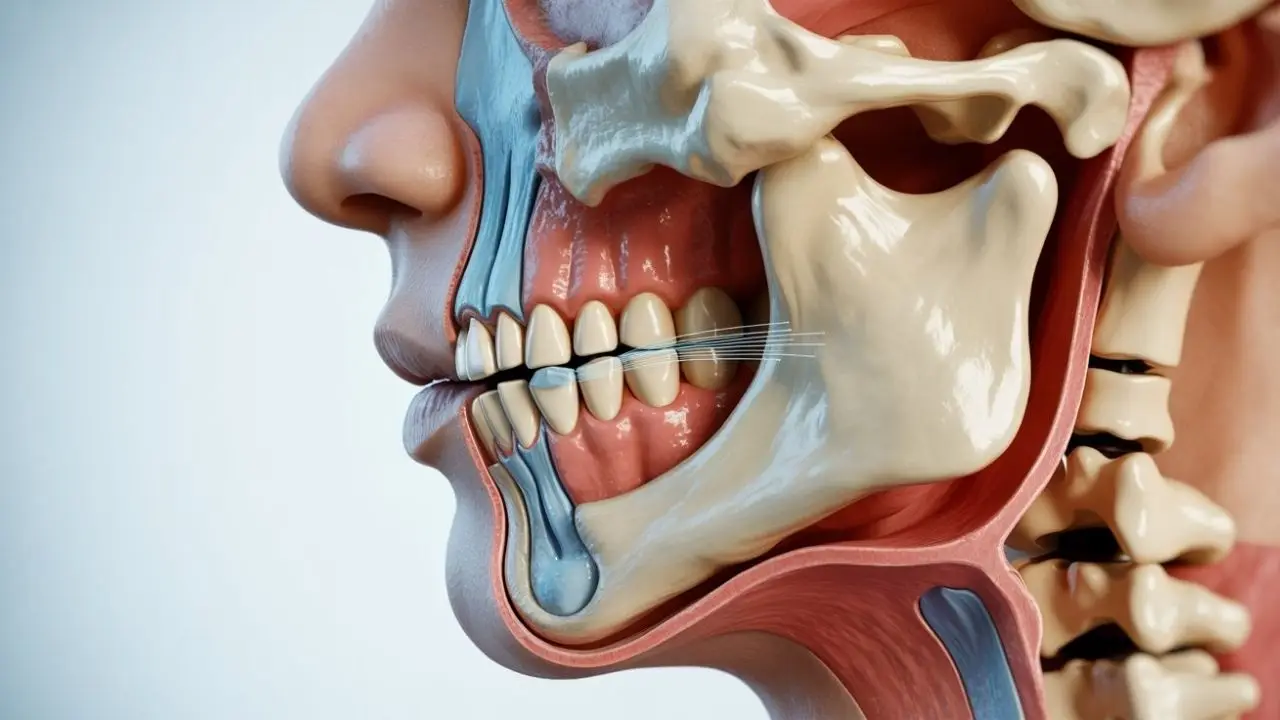
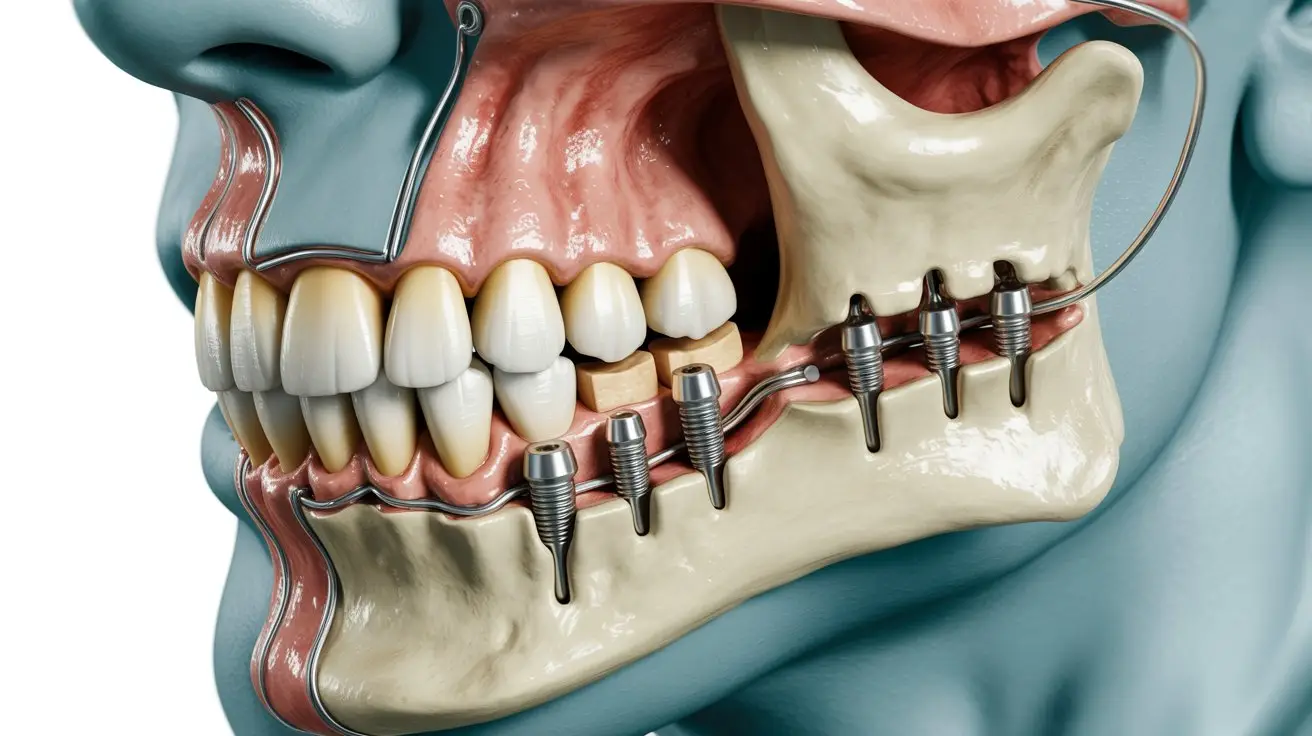
The condition where an excessive amount of upper gum tissue (more than 2-3 millimeters) is exposed during smiling or speaking is referred to in medical literature as a “Gummy Smile.” This condition can stem from overactive lip muscles, short tooth crowns, or the excessive downward skeletal growth of the upper jawbone. Treatment planning is based entirely on the root cause of the problem; while Botox and gum aesthetics suffice for mild cases, Orthognathic Surgery (Corrective Jaw Surgery) is the permanent solution for skeletal cases.
What Causes a Gummy Smile?
In ideal smile aesthetics, little to no gum tissue is expected to show at the junction of the lips and teeth. The excessive display of gums is generally rooted in one (or a combination) of the following three anatomical factors:
Muscular (Hypermobile Lip): When the muscles responsible for elevating the upper lip contract more powerfully than normal, the lip is pulled up too high during a smile, excessively exposing the gums.
Dental/Gingival (Altered Passive Eruption): This occurs when the gums fail to recede sufficiently from the tooth enamel during the eruption phase in childhood. The teeth appear short, while the gum line remains excessively long.
Skeletal (Vertical Maxillary Excess): This is a condition where the upper jawbone (maxilla) grows excessively in a vertical (downward) direction during the developmental years. The problem lies not in the teeth or the lips, but directly in the bone structure itself.
When Are Botox and Gum Aesthetics (Gingivectomy) Insufficient?
For patients presenting to clinics with a gummy smile complaint, the first evaluated methods are generally less invasive dermatological or periodontal solutions:
Upper Lip Botox: If the problem is solely the hyperactivity of the lip elevator muscles, Botox injections successfully reduce gum exposure by relaxing the muscle. However, the effect is temporary (averaging 4-6 months) and requires continuous repetition. If applied to skeletal cases, it can unnaturally restrict lip movements, leading to a stiff or frozen smile.
Gingivectomy (Gum Contouring): If the problem is strictly an excess of gum tissue, reshaping the gums with a laser (crown lengthening) yields fantastic results. However, performing this procedure on a patient with a long skeletal base just to hide the gums can expose the tooth roots and result in unnaturally long, disproportionate tooth lengths.
Skeletal Gummy Smile and Orthognathic Surgery (Jaw Surgery)
If a patient has a vertically long face, their lips do not close naturally when at rest (lip incompetence), and a vast expanse of gum tissue is exposed when they smile, the root cause is highly likely skeletal (Vertical Maxillary Excess).
In such skeletal cases, the permanent, aesthetic, and functional solution is Orthognathic Surgery. To solve the problem at the bone level, Prof. Dr. Celal Çandırlı utilizes 3D Virtual Surgical Planning (VSP) technologies to mathematically determine the ideal height of the upper jawbone.
During the surgery, the upper jawbone is freed (via a Le Fort I osteotomy), the excessively elongated bone segment is carefully removed, and the upper jaw is impacted (moved upward) exactly as planned. Once the skeletal foundation is elevated, the teeth and gums fall into perfect harmony with the upper lip.
Comparison: Non-Surgical vs. Orthognathic Surgery
| Feature | Non-Surgical Methods (Botox/Gingivectomy) | Skeletal Orthognathic Surgery |
| Indication (Ideal Use) | Muscle hyperactivity and dental/gingival imbalances. | Downward elongation of the upper jawbone (skeletal excess). |
| Longevity | Botox is temporary and must be constantly repeated. | Results are lifelong as the bone is permanently repositioned. |
| Smile Dynamics | Some patients may feel their smile is restricted after Botox. | Allows for a natural, free, and unrestricted laugh since lip muscles are untouched. |
| Lip Competence | Does not correct the gap between the lips while at rest. | Lips close naturally and effortlessly because the underlying bone is lifted. |
| Facial Proportion | Has no effect on the overall vertical length of the face. | Shortens a long facial profile, bringing it closer to the golden ratio. |
Frequently Asked Questions (FAQ)
How do I know if my gummy smile is caused by bone or muscle?
A definitive diagnosis requires a clinical examination and cephalometric (profile) X-ray analysis by a maxillofacial surgeon or an orthodontist. However, if your face is longer than average and your lips do not close naturally on their own when you are not speaking, there is a very high probability that it is skeletal.
Will upper jaw surgery leave a scar on my face?
No. All orthognathic surgical procedures (upper jaw impaction) performed to treat a gummy smile are conducted entirely intraorally (inside the mouth). There will be no visible surgical incisions or scars on your skin or lip area from the outside.
Is it enough to only have surgery on my upper jaw?
In many skeletal gummy smile cases, impacting (lifting) only the upper jaw is sufficient. However, when the upper jaw is moved upward, the closing angle of the lower jaw (autorotation) inherently changes. If there is also an existing retrusion or protrusion in the lower jaw, it may be necessary to intervene in the lower jaw as well (Double Jaw Surgery) to achieve perfect harmony. This is definitively determined during the 3D planning phase.
To discover the anatomical cause of your gummy smile and to evaluate permanent treatment options through advanced 3D analysis, you can schedule a medical consultation at the Prof. Dr. Celal Çandırlı clinic.