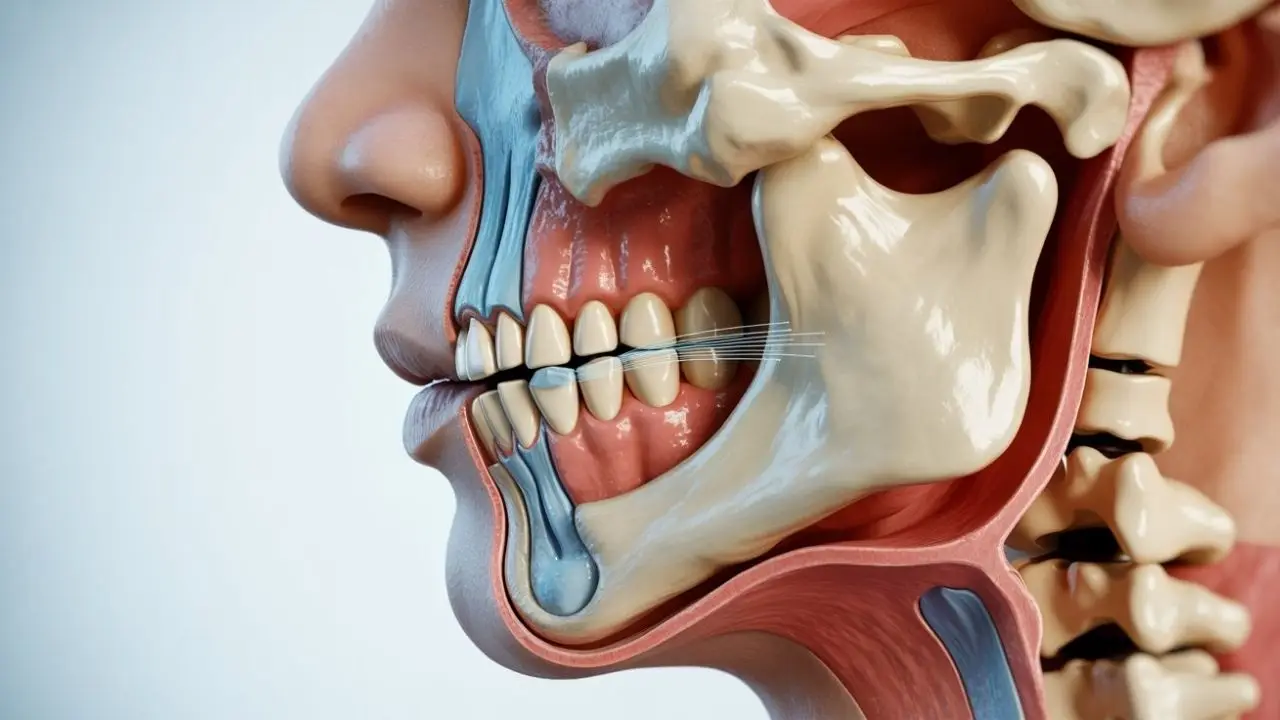
Absolute, flawless symmetry does not exist in human nature; the right and left halves of our faces always bear slight differences. However, if you look in the mirror or at photographs and notice that the tip of your chin visibly shifts to the right or left, this condition may point to a skeletal structural issue rather than just an aesthetic imbalance.
The ideal facial balance, often referred to as the “Golden Ratio” in facial aesthetics, is directly related to the correct positioning of the jawbones. So, how can you tell if the asymmetry in your face stems merely from muscles (soft tissue) or the jawbone itself (skeletal)? Here is a simple facial symmetry test and a scientific guide to solutions that you can apply in the comfort of your home.

At-Home Facial Symmetry Test: A Step-by-Step Guide
Simply looking in the mirror might not be sufficient to accurately analyze your face, as our eyes naturally become accustomed to our own reflection. For the most accurate anatomical evaluation, you can conduct an objective test by following these steps:
Step 1: Correct Angle and Camera Usage
First and foremost, the “selfie” (front) cameras of smartphones always distort and widen facial features due to their lens structure (the fisheye effect).
Place your phone on a tripod or a stable surface.
Always use the back camera.
Ensure that the lighting hits your face evenly directly from the front (e.g., facing a window) to prevent deceptive shadows.
Keep your head straight, bite your teeth together naturally, and look directly forward at the camera while taking the photo.
Step 2: Facial Midline Analysis
Open the photo you took on your phone and divide your face vertically in half using a digital editing tool (or an imaginary line).
Start from the exact center of your forehead, draw a straight line passing through the bridge of your nose, down to the junction of your lips (philtrum), and finally to the tip of your chin.
Evaluation: If this straight line does not divide your chin tip exactly in half, and your chin tip falls to the right or left of this line, there is a high probability of a skeletal deviation (asymmetry) in your lower jawbone.
Step 3: Dental Occlusion Check
Stand in front of a mirror, part your lips, and bite down naturally so your back teeth touch.
Does the vertical line passing between your top two front teeth perfectly align with the vertical line passing between your bottom two front teeth?
Evaluation: If the midlines of the upper and lower teeth do not match (if there is a shift), the source of the facial asymmetry is highly likely the anatomical position of the jaw skeleton, not just soft tissue.
Types of Facial Asymmetry: Soft Tissue or Skeletal?
If you noticed an asymmetry during the test, understanding the medical approach to this condition will guide you to the correct treatment:
| Feature | Soft Tissue (Muscle/Fat) Asymmetry | Skeletal (Jawbone) Asymmetry |
| Origin | Unilateral chewing habits, uneven muscle development, or regional fat distribution. | The jawbones growing asymmetrically to the right or left during developmental years. |
| Appearance | One side of the face looks fuller or more muscular; the chin tip is usually centered. | The chin tip and the dental midline noticeably deviate from the center of the face. |
| Medical Solution | Dermal fillers, masseter Botox, or medical skin aesthetic procedures. | Repositioning and centering the skeleton via Orthognathic Surgery (Jaw Surgery). |
The Permanent Solution for Jaw Deviation: Orthognathic Surgery
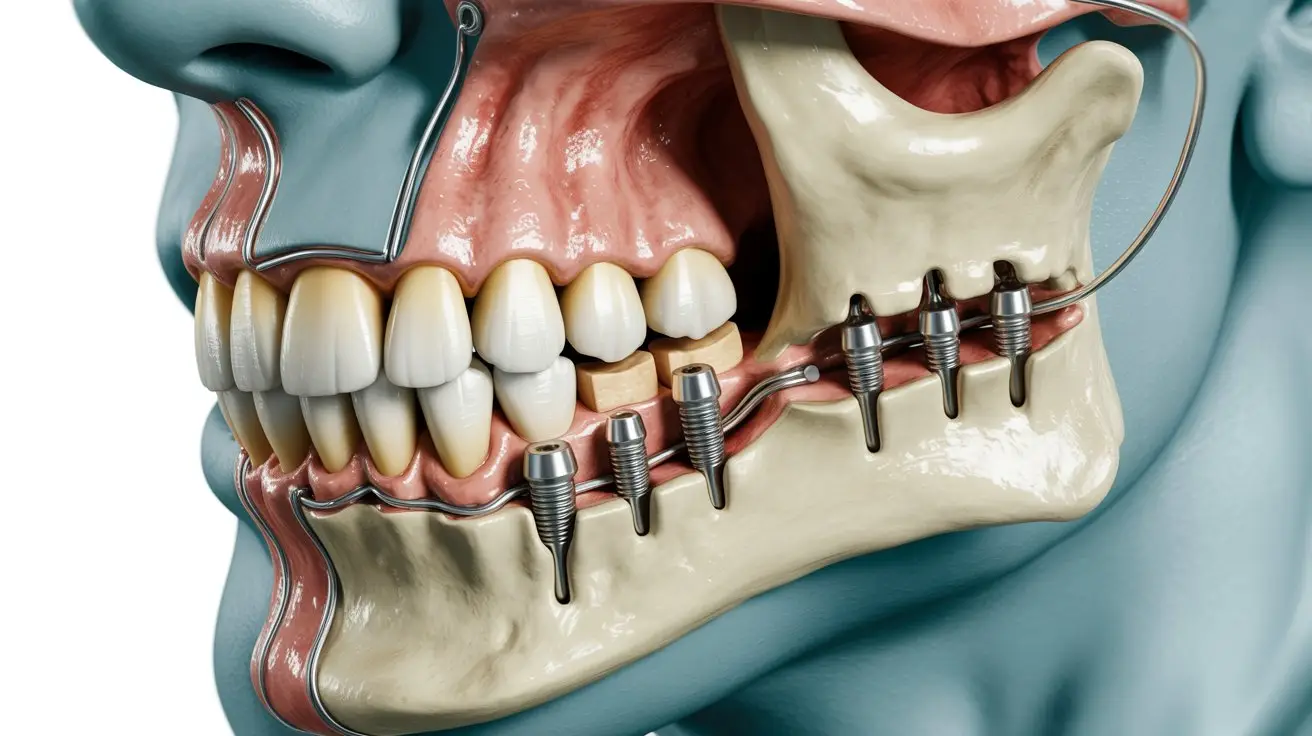
If your home test revealed a skeletal shift in your dental bite and chin tip, the path to resolving this permanently and naturally is through Orthognathic Surgery (Corrective Jaw Surgery) procedures.
Attempting to correct an anatomically deviated jawbone using only medical dermal fillers does not change the curvature of the bone; it merely provides a temporary visual camouflage. For a permanent, aesthetic facial profile that complies with the golden ratio, the actual bone must be moved to its natural, healthy, and centered position.
3D Virtual Surgical Planning (VSP) for the Golden Ratio
Prof. Dr. Celal Çandırlı utilizes Virtual Surgical Planning (VSP), the most advanced medical technology available today, in the treatment of skeletal asymmetries.
In this advanced surgical approach, the process works as follows:
A high-resolution 3D Cone Beam Computed Tomography (CBCT) scan of the patient’s facial skeleton is taken.
In a digital environment, the ideal millimetric angles required to bring the patient’s face to the golden ratio are calculated. The upper and lower jaws are digitally aligned to the exact center (midline).
During the surgery, the jawbones are moved to their new positions strictly adhering to this flawless digital plan. Because the entire procedure is performed intraorally (inside the mouth), no external surgical scars or incisions are left on the face.
The symmetry test you perform at home only provides a clue. To scientifically determine the anatomical source of your facial asymmetry and to receive a customized, permanent treatment plan designed with 3D technologies, you can schedule a specialist consultation at the Prof. Dr. Celal Çandırlı clinic.