he Ultimate Guide to Recessed Jaw (Mandibular Retrognathia): Causes, Health Risks, and Surgical Solutions
A “weak chin” or a “recessed jaw” is often discussed in terms of facial aesthetics, profile harmony, and self-confidence. However, in the field of Maxillofacial Surgery, a recessed jaw—clinically known as Mandibular Retrognathia—is recognized as a significant skeletal anomaly that affects far more than just your appearance.
If your lower jaw is positioned too far back relative to your upper jaw, you likely struggle with a deep overbite, difficulty chewing, and in many cases, life-threatening sleep disorders. This comprehensive guide will explore why the jaw fails to grow properly, why “camouflage” orthodontics often fail, and how Orthognathic Surgery can permanently restore both your facial health and your profile.
1. What is Mandibular Retrognathia (Recessed Jaw)?
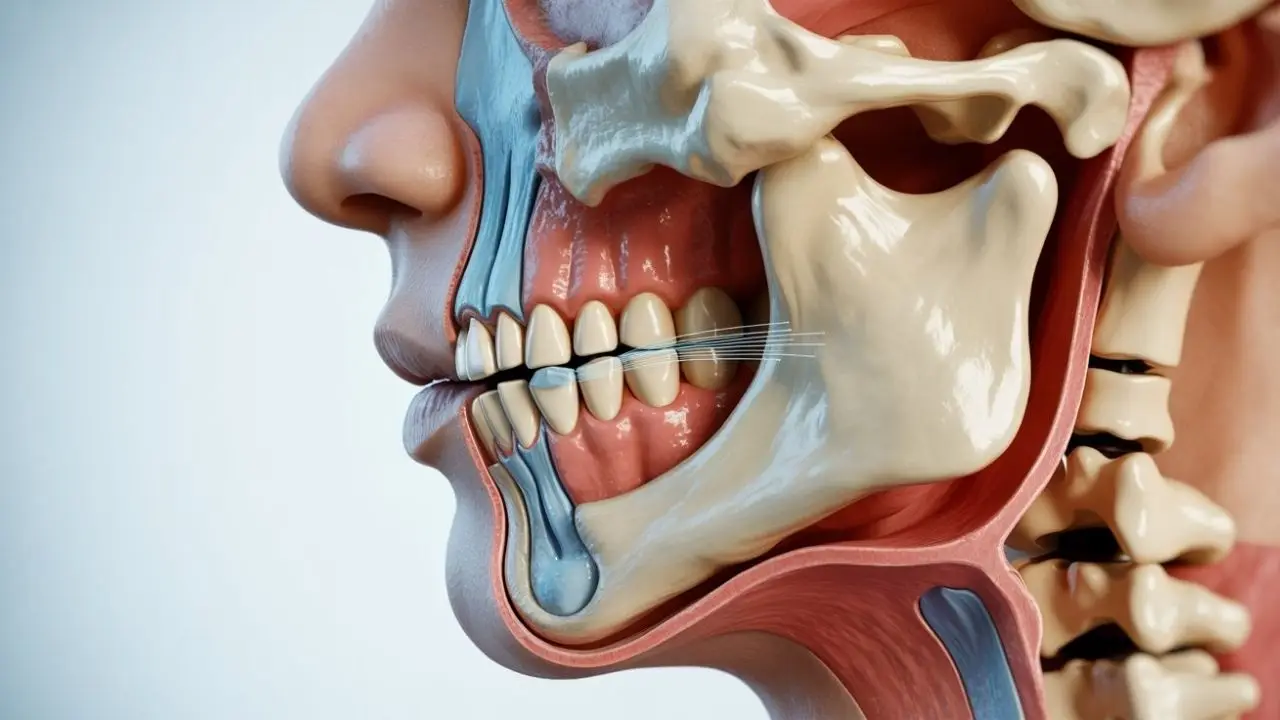
Mandibular retrognathia occurs when the lower jaw (mandible) is significantly shorter or positioned further back than the upper jaw (maxilla). This creates a “bird-like” profile where the chin appears to blend into the neck, and the upper front teeth often protrude far beyond the lower ones (a severe overbite).
While the aesthetic impact is immediate, the internal structural impact is more severe. Because the lower jaw is the primary support for the tongue and soft tissues of the throat, a recessed jaw often leads to a crowded or narrowed airway, directly contributing to snoring and obstructive sleep apnea.
2. Common Symptoms and Functional Challenges
Patients with a recessed jaw often experience a combination of the following issues:
Skeletal Overbite: The upper teeth seem to “hang over” the lower teeth, making it difficult to close the lips naturally without straining the chin muscles (mentalist strain).
Chewing Efficiency: Because the teeth do not interlock correctly (malocclusion), breaking down food becomes difficult, leading to digestive issues.
Speech Impediments: Difficulty pronouncing certain sounds due to the tongue’s lack of proper space and the teeth’s misalignment.
TMJ Pain and Headaches: The jaw joints (Temporomandibular Joints) are forced to work in an unnatural, stressed position to compensate for the skeletal imbalance, leading to chronic clicking, popping, and pain.
Obstructive Sleep Apnea (OSA): This is perhaps the most dangerous symptom. A small lower jaw pushes the base of the tongue backward into the airway, causing it to collapse during sleep.
3. The Root Causes: Why Does the Jaw Stay Small?
Genetics: Most cases of retrognathia are inherited. If a parent or close relative has a weak chin, there is a high probability that the skeletal growth pattern will be passed down.
Childhood Habits: Chronic thumb sucking or prolonged use of a pacifier can put pressure on the developing bones, potentially stunting forward mandibular growth and pushing the upper teeth forward.
Airway Issues: Children who suffer from chronic nasal congestion or enlarged adenoids often become “mouth breathers.” Long-term mouth breathing changes the posture of the tongue and jaw, often resulting in a narrow upper jaw and a recessed lower jaw (the “Long Face Syndrome”).
Trauma: Injury to the growth centers of the jaw (the condyles) during childhood can stop or slow down the natural forward development of the mandible.
4. The Myth of “No-Surgery” Fixes: Camouflage vs. Correction
Many patients are told that their recessed jaw can be fixed with “special braces” or “aligners.” It is critical to distinguish between dental and skeletal issues.
Camouflage Orthodontics: If a surgeon attempts to fix a skeletal jaw gap only with braces, they are performing “camouflage.” This involves tipping the upper teeth backward and the lower teeth forward to force them to meet.
The Danger: This does not move the bone. It often leads to receding gums, thinning of the bone around the teeth, and it does nothing to help the airway or the facial profile. In fact, pulling the upper teeth back can sometimes make a weak chin look even more prominent.
True Skeletal Correction: This requires moving the actual foundation. By repositioning the jawbone itself, we fix the bite, open the airway, and restore the facial profile simultaneously.
5. Orthognathic Surgery (BSSO) with Prof. Dr. Celal Çandırlı
The gold standard for correcting a recessed lower jaw is the Bilateral Sagittal Split Osteotomy (BSSO). As an expert in Maxillofacial Surgery, Prof. Dr. Celal Çandırlı utilizes a high-precision digital workflow to ensure safety and aesthetic excellence.
Step 1: 3D Virtual Surgical Planning (VSP)
Using high-resolution 3D CBCT scans, the patient’s entire skull is digitally modeled. Prof. Dr. Celal Çandırlı simulates the surgery on a computer, determining the exact millimeter of forward movement required to achieve the “Golden Ratio” of the face while maximizing the airway space behind the tongue.
Step 2: The Procedure (Scarless Technique)
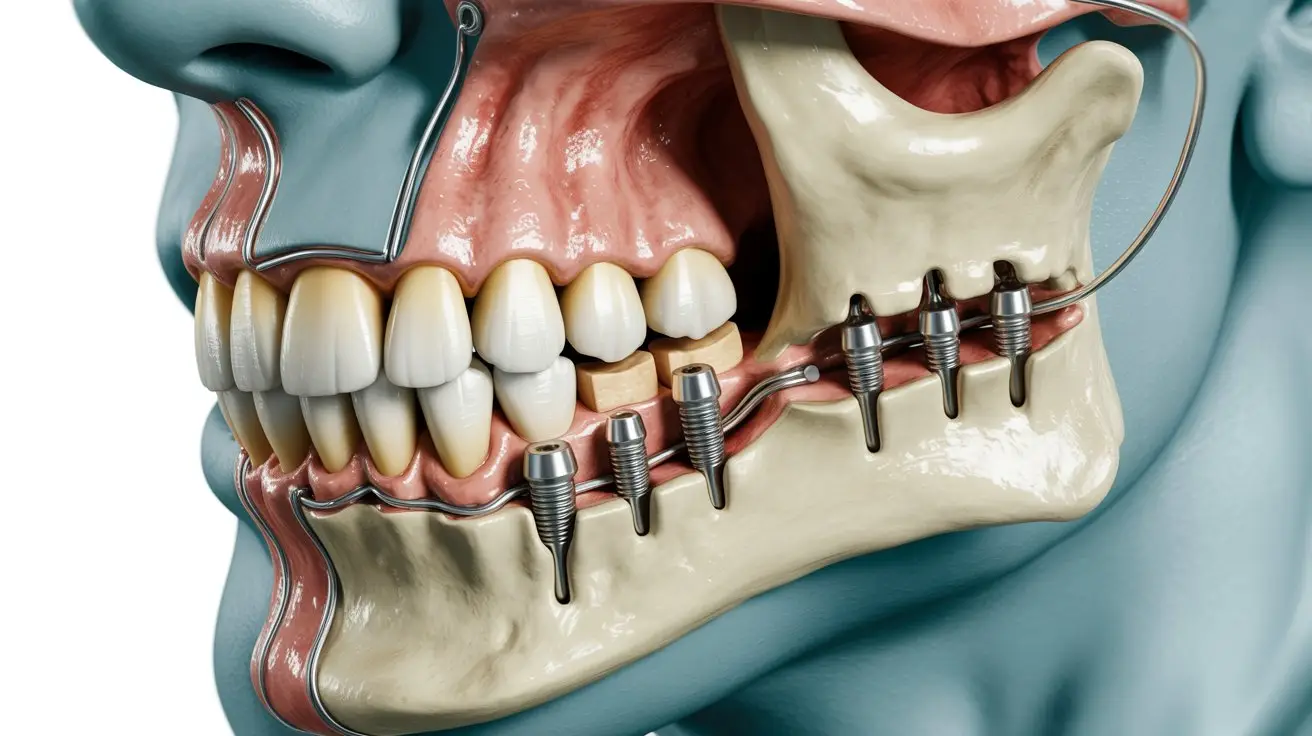
The surgery is performed entirely inside the mouth under general anesthesia. There are no external cuts or scars on the face. The lower jawbone is carefully divided, slid forward into its new, ideal position, and secured with bio-compatible micro-titanium plates.
Step 3: Immediate Stability
Because we use Rigid Internal Fixation, the jaw is stable the moment you wake up. There is no need to wire your jaws shut. You can open your mouth and speak immediately after the procedure.
6. The Link Between Jaw Surgery and Sleep Apnea
If you suffer from chronic fatigue, loud snoring, or waking up gasping for air, your recessed jaw might be the culprit. Orthognathic surgery is one of the most effective treatments for Obstructive Sleep Apnea.
By moving the lower jaw forward (Mandibular Advancement), the muscles of the floor of the mouth and the tongue are also pulled forward. This physically opens up the airway, often curing sleep apnea instantly and eliminating the need for a CPAP machine for the rest of your life.
7. Recovery: What to Truly Expect
Hospital Stay: Most patients stay in the hospital for 1 or 2 nights for observation.
The First Week: Swelling is a natural part of the process and peaks around day 3 or 4. Pain is surprisingly mild for most patients and is easily managed with standard oral medication.
Diet: You will follow a liquid and very soft food (no-chewing) diet for about 4 to 6 weeks to allow the bone to heal in its new position.
Returning to Life: Most patients return to school or office work within 2 to 3 weeks. The final aesthetic result is usually fully visible after 3 to 6 months once all residual swelling has vanished.
8. Frequently Asked Questions (FAQ)
Can jaw surgery be combined with a chin implant (Genioplasty)?
Yes. During the same surgery, Prof. Dr. Celal Çandırlı often performs a sliding genioplasty. Instead of using a synthetic implant, the patient’s own chin bone is moved forward. This provides the most natural-looking and permanent aesthetic enhancement to the jawline.
Will I have permanent numbness in my lip?
Because the main sensory nerve (Inferior Alveolar Nerve) runs through the lower jaw, some temporary numbness in the lower lip is common after surgery. However, with the precise surgical techniques used by Prof. Dr. Celal Çandırlı, the nerve is carefully protected. Most patients regain full sensation within a few months.
Is the surgery covered by insurance?
When a recessed jaw causes functional issues like severe malocclusion, TMJ disorders, or obstructive sleep apnea, the surgery is often considered a medical necessity rather than a purely cosmetic one. We recommend a detailed clinical evaluation and 3D imaging to provide the necessary documentation for your insurance provider.