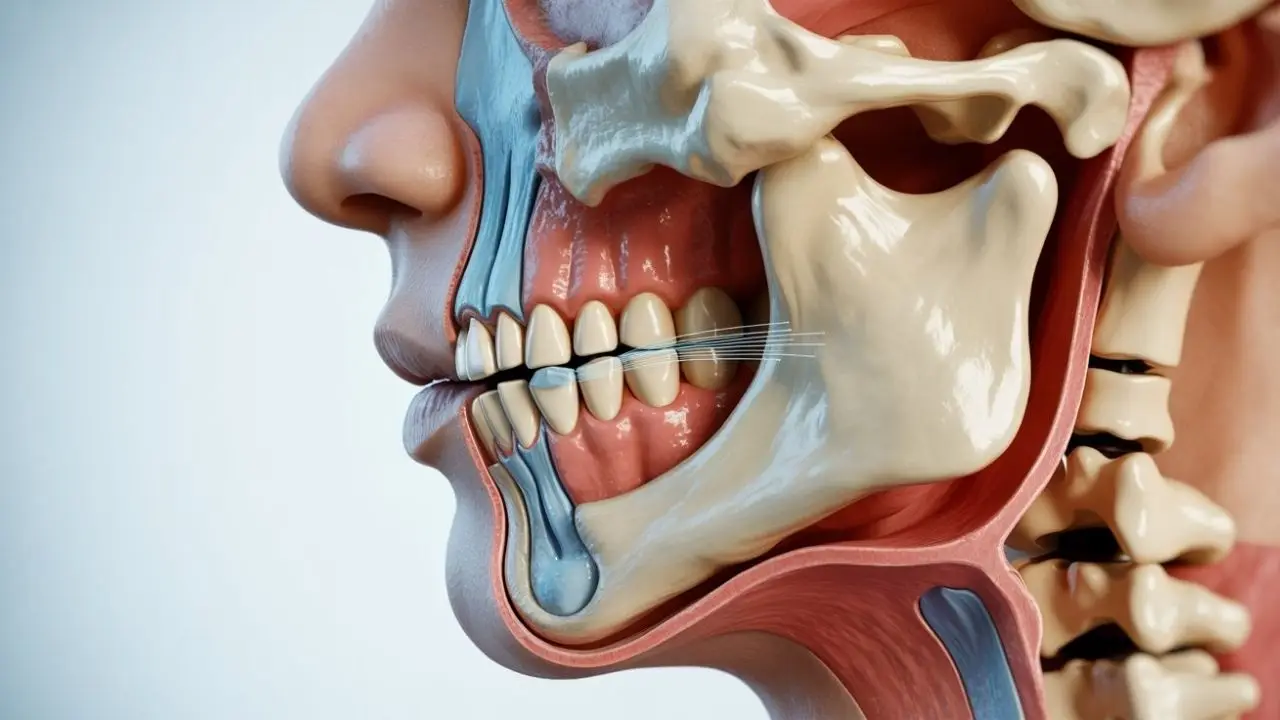
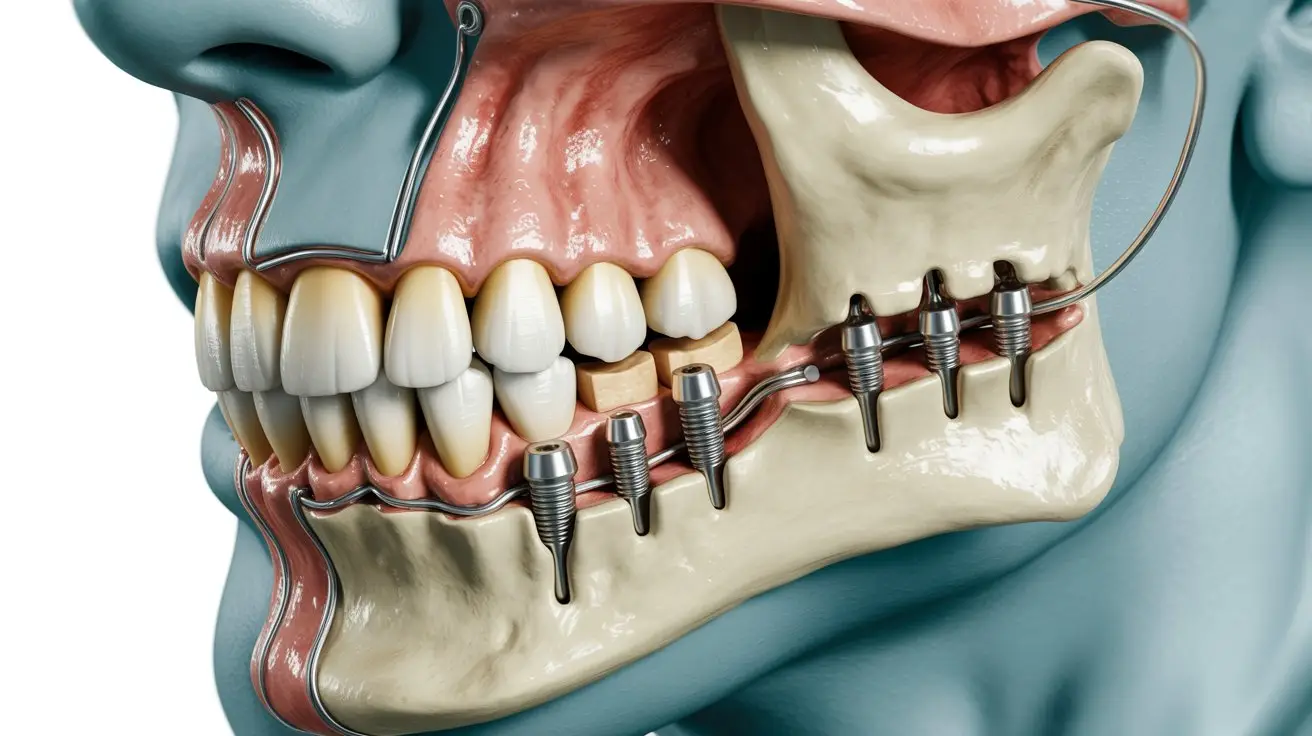
When looking in the mirror, you may notice that your jaw shifts to the left or right, or that your lower jaw sits too far forward or backward (asymmetry). Today, “Smile Design” (Zirconia or Porcelain Veneers) is frequently considered to correct such appearances. While aesthetic dentistry yields phenomenal results for tooth discoloration, minor crowding, and poor tooth shape, it cannot address the root cause if the foundational problem lies in the incorrect positioning of the jawbone itself. Attempting to solve a skeletal bite discrepancy solely by crowning the teeth (a practice known as Prosthetic Camouflage) not only fails to correct your external facial profile but also brings about significant biological costs.
What is Prosthetic Camouflage in Skeletal Issues?
Conditions such as lower jaw protrusion (Prognathism), retrusion (Retrognathia), or facial asymmetry are medically classified as “skeletal malocclusions” (bite discrepancies).
In these cases, instead of surgically moving the jawbones into their correct anatomical positions, the teeth on the misaligned jaw are shaved down (reduced) and covered with zirconia veneers of varying thicknesses and angles to make the bite look “straight.” In medical literature, this is called Prosthetic Camouflage. When the patient smiles in the mirror, their teeth appear straight and white; however, the underlying skeletal foundation (the bone position) remains faulty.
The Limits and Risks of Hiding Skeletal Issues by Shaving Teeth
If you have extensive tooth decay or significant structural loss in your teeth, getting veneers is a highly appropriate treatment. However, if your teeth are completely healthy and the camouflage is planned solely because your jawbone is retruded or crooked, certain anatomical risks arise:
Biological Tooth Loss: To place veneers, the enamel (and sometimes the dentin) of healthy, decay-free teeth must be shaved down by several millimeters. Sacrificing dozens of healthy teeth just to mask the underlying skeletal error is a procedure with a very high biological cost.
Ineffective on Facial Profile: Zirconia veneers only change the appearance of the teeth inside your mouth. If your jaw is retruded or your face is asymmetrical, no amount of aesthetic veneers will correct your external facial profile, lip support, or double chin appearance.
TMJ (Jaw Joint) Stress: Forcing the bite to balance by simply thickening the porcelain on top of the teeth, without changing the jawbone’s position, can place an unnatural load on the Temporomandibular Joint (TMJ). Over time, this can lead to chronic jaw joint pain, clicking sounds, and muscle fatigue.
The Definitive Solution for Skeletal Issues: Orthognathic (Jaw) Surgery
If the source of the problem is the volume, size, or position of the jawbone rather than the teeth, the permanent and healthy medical solution is Orthognathic Surgery.
Prof. Dr. Celal Çandırlı intervenes at the root of the problem (the bone architecture) in skeletal jaw deformities using 3D Virtual Surgical Planning (VSP). Through orthodontic (braces) treatment before and after the surgery, your natural teeth are aligned without being shaved down. During the surgical procedure, the upper and lower jawbones are millimetrically advanced or repositioned to their ideal placements, achieving the golden ratio for your face.
Through this method, your perfectly healthy natural teeth remain untouched. Because the foundation (the jawbone) is corrected, your teeth will naturally close flawlessly. Moreover, not only is your smile improved, but your entire facial profile, jawline, and airway are permanently enhanced.
Comparison: Smile Design (Veneers) vs. Orthognathic Surgery
| Feature | Smile Design (Zirconia Veneers) | Orthognathic Surgery (Jaw Surgery + Orthodontics) |
| Indication (Ideal Use) | Tooth color issues, shape deformities, missing teeth, and decay. | Skeletal jaw retrusion, protrusion, and facial asymmetry. |
| Effect on Natural Teeth | The enamel (and sometimes dentin) of the teeth is irreversibly shaved down. | Natural teeth are not shaved; they are simply aligned to the correct angle via orthodontics. |
| Effect on Facial Profile | Cannot change the external appearance of the face or the chin position. | Anatomically corrects the facial profile, jaw asymmetry, and skeletal bite. |
| Bite and TMJ Health | Forcing the bite in skeletal cases can exhaust the joint. | Eliminates stress on the TMJ because the bone foundation is corrected. |
Frequently Asked Questions (FAQ)
My doctor said they can fix my jaw asymmetry with veneers (Zirconia/Emax). Should I do it?
If the asymmetry is strictly in the alignment of your teeth (for example, one tooth is shorter while another is longer), aesthetic veneers are a fantastic solution. However, if your actual jawbone is shifted to the left or right, attempting to mask a skeletal condition by shaving down healthy teeth is ill-advised. Seeking an evaluation from an orthodontist and a maxillofacial surgeon is the medically correct approach.
I have already had my teeth shaved and veneered, but my jaw still sits too far forward/backward. Can I still have jaw surgery?
Yes. Orthognathic surgery (jaw surgery) can absolutely be planned even if you already have zirconia or porcelain veneers in your mouth. Through collaborative planning between a specialist orthodontist and a maxillofacial surgeon, your current veneers can be protected while your jawbones are permanently moved into their ideal skeletal positions.
Are braces mandatory before jaw surgery (Orthognathic Surgery)?
In most cases, yes. When the bones are moved to their ideal position (the center of the face) during jaw surgery, the upper and lower teeth must fit together perfectly like a lock and key in this new position. To ensure this, the dental arches are corrected using orthodontic braces (or clear aligners) prior to the surgery.
Will jaw surgery leave a visible scar on my face?
No. All bone procedures (osteotomies) in orthognathic surgery are performed entirely intraorally, through the gums inside your mouth. There will be no visible surgical incisions or scars on the outside of your face or neck.
To determine whether your facial asymmetry or bite disorder is dental or skeletal, and to establish your permanent treatment plan using 3D analysis, you can schedule a specialist consultation at the Prof. Dr. Celal Çandırlı clinic.