TMJ Disorders: Causes of Jaw Clicking, Locking, and Advanced Surgical Treatments
Do you wake up in the morning with a deep, aching fatigue in your jaw and temples? Do you hear loud, embarrassing “clicking” or “popping” sounds right in front of your ear when you eat or yawn? Have you ever experienced the terrifying sensation of your jaw locking, unable to open or close your mouth fully?
If you are suffering from these symptoms, you are experiencing a Temporomandibular Joint (TMJ) Disorder. TMJ issues are incredibly common, yet they are among the most frequently misdiagnosed conditions in healthcare. Countless patients spend years being treated for chronic migraines, tension headaches, or even neck spine issues, unaware that the true epicenter of their chronic pain lies right in the joints of their jaw.
In this comprehensive guide, we will explore the anatomical breakdown of the jaw joint, explain why standard plastic night guards often fail to cure the problem, and detail how Maxillofacial Surgical expertise can permanently restore your pain-free quality of life.

Why Does the Jaw Joint (TMJ) Break Down?
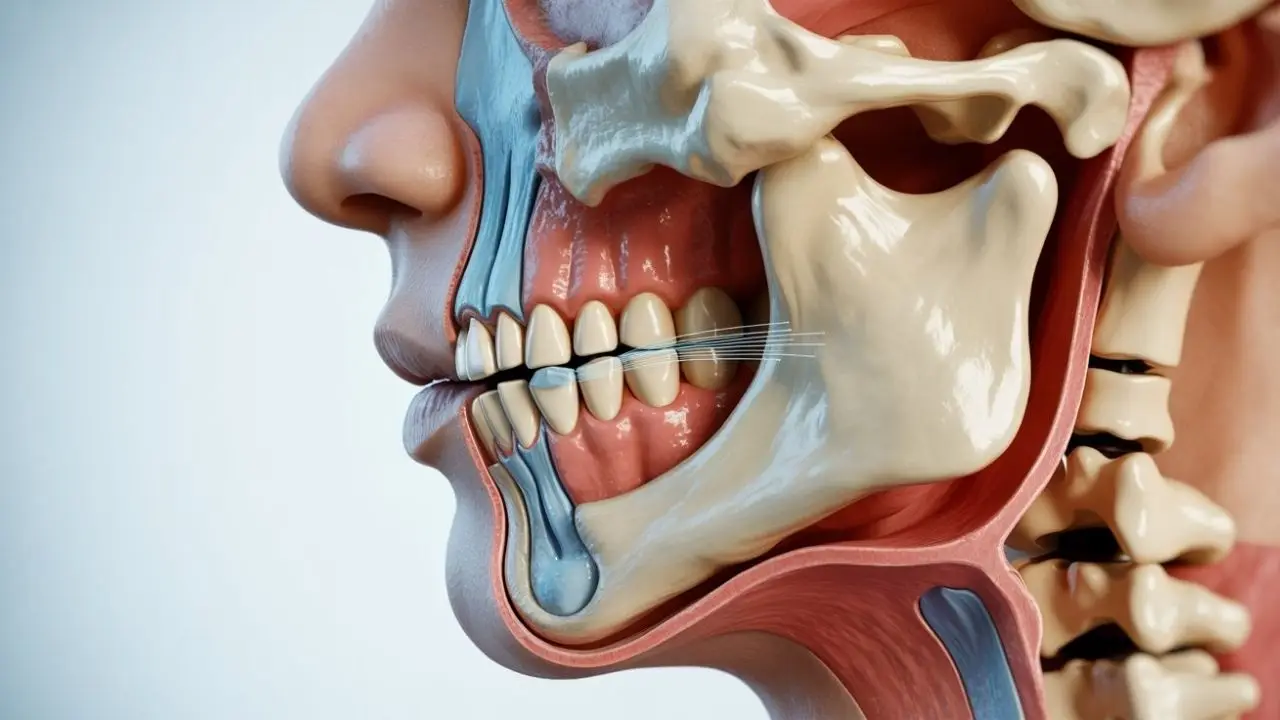
The temporomandibular joint is the most complex, heavily used, and unique joint in the human body. It is the only joint that must simultaneously hinge (rotate) and slide forward (translate). Nestled between the lower jaw and the skull base is a vital piece of shock-absorbing cartilage called the articular disc (meniscus). Over 90% of TMJ disorders originate when this disc slips out of place or begins to degenerate.
The primary triggers for this breakdown include:
Bruxism (Teeth Grinding & Clenching): Often driven by subconscious stress during sleep, bruxism forces the jaw muscles to exert hundreds of pounds of pressure onto the joint. Over time, this immense force squashes the protective disc and pushes it out of its correct alignment.
Malocclusion (A Bad Bite): Missing back teeth or severe skeletal jaw misalignments (like an overbite or underbite) force the jaw joints to work asymmetrically, accelerating wear and tear on one side.
Macrotrauma: A sudden, hard impact to the jaw—such as a sports injury, a car accident, or even a difficult wisdom tooth extraction—can tear the ligaments that hold the TMJ disc in place.
Chronic Posture Issues: “Tech neck” or constantly looking down at a screen alters the resting tension of your neck muscles, which structurally pulls the lower jaw backward, compressing the TMJ.
The “Great Imposter”: Symptoms of TMJ Disorders
TMJ issues rarely present as just “jaw pain.” The joint is surrounded by a complex network of nerves and muscles, causing a wide array of symptoms that often mimic other diseases:
A loud clicking, popping, or grating (crepitus) sound when opening or closing the mouth.
Limited mouth opening (trismus) or the jaw completely locking in an open or closed position.
Ringing in the ears (Tinnitus), earaches, or a feeling of “fullness” in the ear without any ear infection.
Chronic tension headaches radiating behind the eyes, temples, and back of the neck.
Noticeable stiffness and fatigue in the facial muscles, especially upon waking.
Why Standard “Night Guards” Are Often Not Enough
When jaw clicking begins, most patients visit a general dentist, receive a hard plastic night guard (occlusal splint), and are told to “reduce stress.” While a splint is an excellent first step to protect the teeth from grinding and to relax the muscles, it cannot fix a joint that is already structurally damaged. If the cartilage disc has fully slipped out of place (disc displacement) or the joint space is severely inflamed, a piece of plastic on your teeth will not cure the internal joint pathology. At this advanced stage, the expertise of an Oral and Maxillofacial Surgeon is required.
Advanced TMJ Treatments with Prof. Dr. Celal Çandırlı
To accurately diagnose the stage of joint deterioration, Prof. Dr. Celal Çandırlı combines a rigorous clinical examination with highly detailed TMJ MRI (Magnetic Resonance Imaging) scans to visualize the exact position of the soft tissue disc. Depending on the severity, the following advanced protocols are utilized:
1. Therapeutic Botox (Masseter Injection)
For patients whose TMJ pain is primarily driven by uncontrollable, severe muscle spasms and bruxism, Botulinum Toxin (Botox) is injected directly into the masseter and temporalis muscles. This weakens the hyperactive muscle contractions just enough to stop the crushing force on the joint, providing rapid, life-changing pain relief within days.
2. TMJ Arthrocentesis (Joint Lavage)
When the jaw is painfully locked or limited in motion due to severe internal inflammation, Arthrocentesis is performed. This is a highly effective, minimally invasive procedure done under local anesthesia in the clinic. Two tiny needles are inserted into the joint space. The joint is then “washed out” with a sterile solution to flush away inflammatory chemicals and microscopic debris. Finally, artificial joint fluid (hyaluronic acid) is injected to lubricate the joint and allow the disc to glide smoothly again.
3. TMJ Arthroscopy and Open Joint Surgery
In “End-Stage” TMJ disease—where the disc is completely destroyed, the bone surfaces are grinding against each other (osteoarthritis), and the jaw is permanently frozen—surgical intervention is the only option. Prof. Dr. Celal Çandırlı can perform arthroscopy (using micro-cameras to remove scar tissue) or open joint surgery to physically reposition and stitch the slipped disc back into its proper anatomical place.
Frequently Asked Questions (FAQ)
Will the clicking sound in my jaw go away on its own?
No. The clicking sound is the first mechanical warning sign that your protective disc is slipping in and out of place. If ignored, the clicking may eventually stop, but this is usually not a sign of healing. It often means the disc has completely detached and the bones are now grinding directly against each other. Early intervention is critical to save the joint.
Is the Arthrocentesis (joint washing) procedure painful?
The procedure is performed entirely under local anesthesia. While you are fully awake, the joint area is completely numb, meaning you will feel no sharp pain, only a sense of pressure. The entire process takes about 20 to 30 minutes, and most patients experience an immediate, dramatic improvement in their ability to open their mouths as soon as they sit up.