When you look in the mirror and close your teeth, do your upper front teeth cover your lower front teeth much more than normal (or perhaps completely)? Known in medical terminology as a “Deep Bite,” this is a common malocclusion that impairs both chewing function and facial aesthetics. If the problem stems solely from incorrect dental angulation, orthodontic (braces) treatments yield highly successful results. However, if the root of the problem lies in the skeletal discrepancy between the upper and lower jawbones (Short Face Syndrome), the permanent and healthy solution is provided by Orthognathic Surgery (Corrective Jaw Surgery).
Why Does a Deep Bite Occur and What Problems Does It Cause?
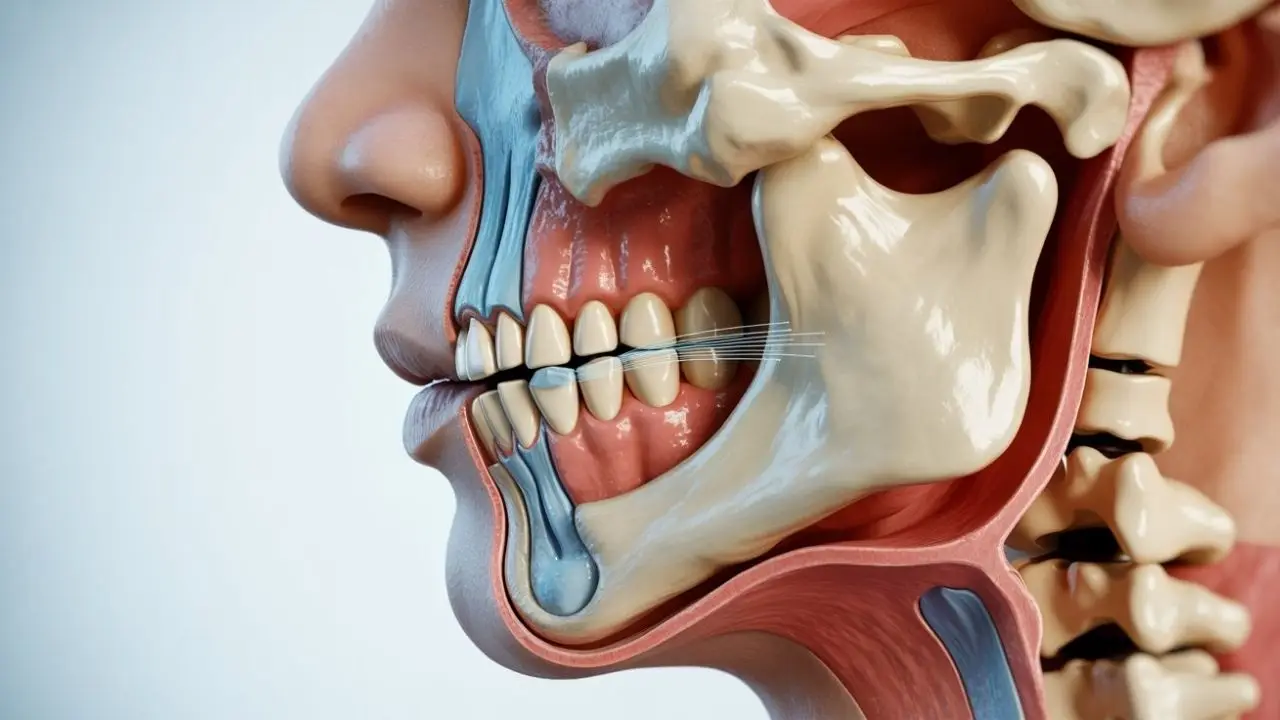
In a healthy dental bite, the upper front teeth are expected to vertically overlap the lower front teeth by about 2-3 millimeters. An increase in this overlap is referred to as a deep bite. Skeletal deep bite cases typically occur when the upper jaw does not grow downward sufficiently during development, or when the lower jaw remains retruded and locks upward (upward rotation).
Often accompanied by “Short Face Syndrome,” where the lower third of the face appears noticeably shorter and compressed, this condition paves the way for the following medical issues:
TMJ (Jaw Joint) Damage: Because the lower jaw is anatomically locked backward and upward, continuous and uneven pressure is applied to the TMJ disc. This leads to clicking sounds in front of the ear, jaw locking, and chronic headaches.
Tooth and Palate Wear: The lower front teeth constantly strike the back of the upper teeth or directly into the upper palate. This trauma causes severe wear on the tooth enamel and chronic injuries to the palatal tissue.
Aesthetic Disproportion: A retruded chin and a compressed lower face disrupt the facial golden ratio, which can inadvertently make the patient appear older or perpetually tense.
Why Might Braces Alone Be Insufficient in Skeletal Cases?
For patients presenting with a deep bite complaint, cephalometric X-rays are used to determine whether the issue is dental or skeletal (bone-related).
If the size and position of your jawbones are normal, braces or clear aligners will perfectly correct the bite by moving the teeth within the bone. However, if your problem is skeletal (the dimensions of the bones are faulty), it is impossible to change the length of the bones or grow the jaw forward using orthodontics alone.
Attempting to close a skeletal case without surgery by excessively tilting the teeth is referred to in medical literature as “Orthodontic Camouflage.” These procedures, which force the anatomical limits of the bone, can lead to tooth root resorption and gum recession over time. Furthermore, because the bone and muscle structures will inherently want to return to their original anatomical positions, the risk of the bite relapsing to its former state is significantly higher with camouflage treatments. Most importantly, intervening solely on the teeth cannot alter the “short and compressed” skeletal appearance of your face.
Orthognathic Surgery (Jaw Surgery) for Skeletal Deep Bites
If a skeletal anomaly lies at the foundation of the deep bite, the gold standard treatment that simultaneously corrects facial proportions, joint health, and occlusion is Orthognathic Surgery.
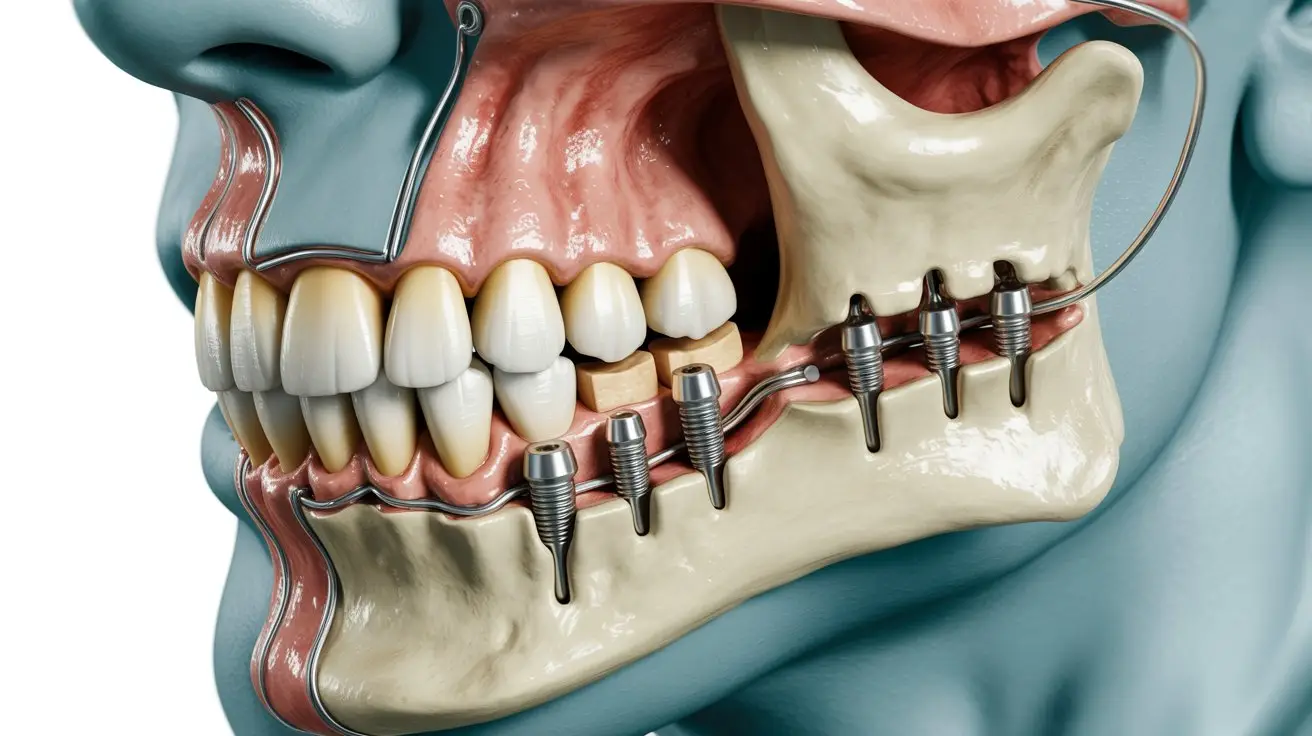
To resolve this skeletal locking, Prof. Dr. Celal Çandırlı utilizes 3D Virtual Surgical Planning (VSP) technology. The teeth are first aligned via pre-surgical orthodontics. During the surgical procedure, the retruded and upward-locked lower jawbone is freed (using the BSSO technique) and advanced forward and downward to its pre-calculated, ideal position.
Because all surgical interventions are performed intraorally (inside the mouth), there are no visible scars left on your skin, cheeks, or neck. As a result of the surgery, the deep overlap of your teeth is permanently erased; the lower third of your face lengthens vertically (eliminating the “short face” appearance), and the advancement of your lower jaw provides you with a natural, beautifully balanced profile.
Comparison: Orthodontic (Dental) vs. Surgical (Skeletal) Approach
| Feature | Braces Only (Orthodontic Camouflage) | Orthognathic Surgery (Surgery + Orthodontics) |
| Indication (Ideal Use) | Deep bites caused strictly by incorrect dental angulation. | Skeletal deep bites caused by the faulty position/size of the jawbones. |
| Facial Aesthetics (Short Face) | Cannot change the vertical dimension, bone length, or facial form. | Vertically lengthens the lower face, achieves the golden ratio, and perfects the profile. |
| TMJ (Jaw Joint) Health | Forcing tooth movements in skeletal cases can further strain the joint. | Anatomically frees the lower jaw, eliminating the abnormal pressure on the joint. |
| Longevity (Relapse Risk) | Carries a risk of the teeth shifting back in skeletal cases. | Results are lifelong as structural repair is achieved at the bone level. |
Frequently Asked Questions (FAQ)
How do I know if my Deep Bite is skeletal?
A definitive diagnosis is made through 3D tomography evaluated by an orthodontist and a maxillofacial surgeon. However, if the lower part of your face looks noticeably short and compressed when your lips are at rest, your lower jaw is retruded, and you wake up with pain in your jaw joint area, it is highly likely that your bite issue is skeletal.
Can a skeletal deep bite be fixed without surgery in adults?
During childhood and early adolescence, skeletal guidance can be achieved through “functional jaw orthopedics.” However, in adult individuals whose growth and development are complete (the bones have fully fused), it is physically impossible to achieve a permanent, anatomical correction of a skeletal anomaly without surgical intervention.
Will I have visible stitches or scars on my face after jaw surgery?
Absolutely not. All orthognathic surgical procedures on the jawbones are performed entirely from inside the mouth (through the gums). There will be no visible surgical incisions or scars on your facial region from the outside.
Can I eat normally right after deep bite surgery?
To support the bone fusion process after surgery, you will need to consume a liquid and puree diet (foods that require no chewing) for the first few weeks. As the bones heal, you will gradually transition back to a normal solid diet with your surgeon’s approval.
How long is the recovery process for the surgery?
Experiencing edema (swelling) in your face during the first week post-surgery is a completely normal and expected natural process. Thanks to advanced surgical techniques, the vast majority of our patients are able to return to their social lives and desk jobs within 10 to 14 days. Your new, defined, and balanced facial contours will become stunningly clear as the swelling subsides.
To determine whether your bite issue is dental or skeletal, and to establish your scientific treatment plan using 3D volumetric analysis, you can schedule a specialist consultation at the Prof. Dr. Celal Çandırlı clinic.